
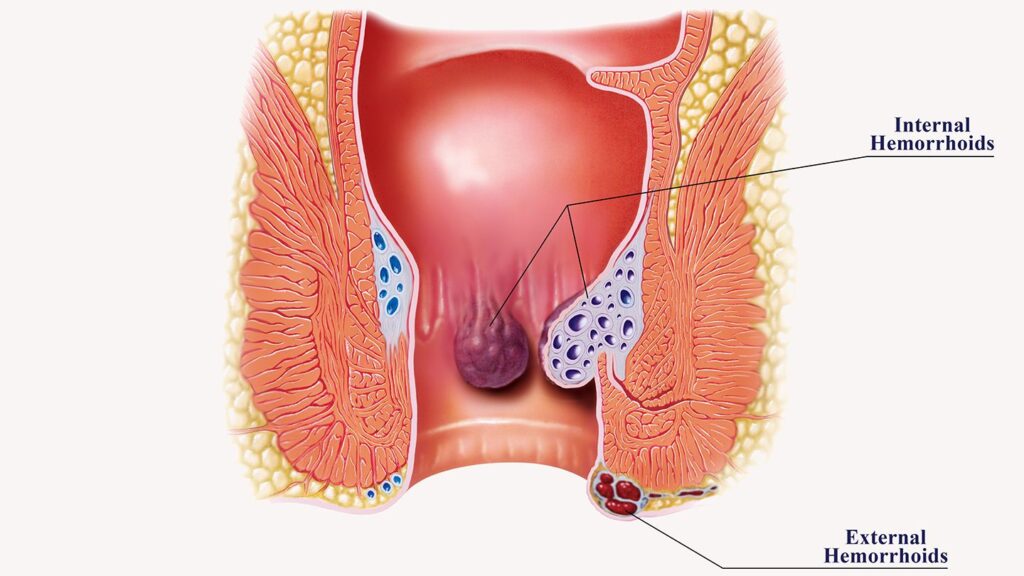
Hemorrhoids are swollen and inflamed blood vessels in the rectum or anus. They can be internal (inside the rectum) or external (under the skin around the anus). Here’s an overview of hemorrhoid symptoms, causes, risk factors, and treatment options:
Symptoms of Hemorrhoids:
Rectal bleeding (bright red blood on toilet paper or in the toilet after a bowel movement)
Itching or irritation in the anal region
Pain or discomfort, especially during bowel movements
Swelling or lumps around the anus
Leakage of feces
Causes and Risk Factors:
Straining during bowel movements: This puts pressure on the rectal veins and can lead to the development of hemorrhoids.
Chronic constipation or diarrhea: Prolonged straining or frequent bowel movements can contribute to hemorrhoids.
Pregnancy: Increased pressure in the pelvic region during pregnancy can cause hemorrhoids.
Obesity: Being overweight or obese increases the risk of developing hemorrhoids.
Sedentary lifestyle: Lack of physical activity can contribute to the development of hemorrhoids.
Aging: The tissues supporting the veins in the rectum and anus may weaken with age.
Treatment for Hemorrhoids:
Lifestyle Modifications:
Increase fiber intake: Consume more fruits, vegetables, whole grains, and legumes to soften the stool and ease bowel movements.
Stay hydrated: Drink an adequate amount of water to prevent constipation.
Avoid straining: Use the restroom when the urge arises and avoid prolonged sitting on the toilet.
Regular exercise: Engage in physical activity to improve bowel function and prevent constipation.
Topical Treatments:
Over-the-counter creams, ointments, or suppositories containing hydrocortisone or witch hazel can help alleviate symptoms such as itching and inflammation.
Use stool softeners or fiber supplements if recommended by a healthcare professional.
Procedures and Interventions:
Rubber band ligation: The most common procedure for internal hemorrhoids. A rubber band is placed around the base of the hemorrhoid, cutting off its blood supply and causing it to shrink and fall off.
Sclerotherapy: Injection of a chemical solution into the hemorrhoid to shrink it.
Infrared coagulation: Heat is used to cause the hemorrhoid to shrink and scar.
Hemorrhoidectomy: Surgical removal of the hemorrhoids.
It is important to consult with a healthcare professional for an accurate diagnosis and appropriate treatment recommendations. They can assess the severity of the hemorrhoids and recommend the most suitable treatment options for your specific situation.


